
Affiliate Disclosure
This article contains an affiliate link. If you purchase the GOAT Webinar Coaching Recordings through the link above, I earn a commission — at no extra cost to you. I only recommend products I've used myself and believe in. My opinions here are my own, based on my own results, not the vendor's.
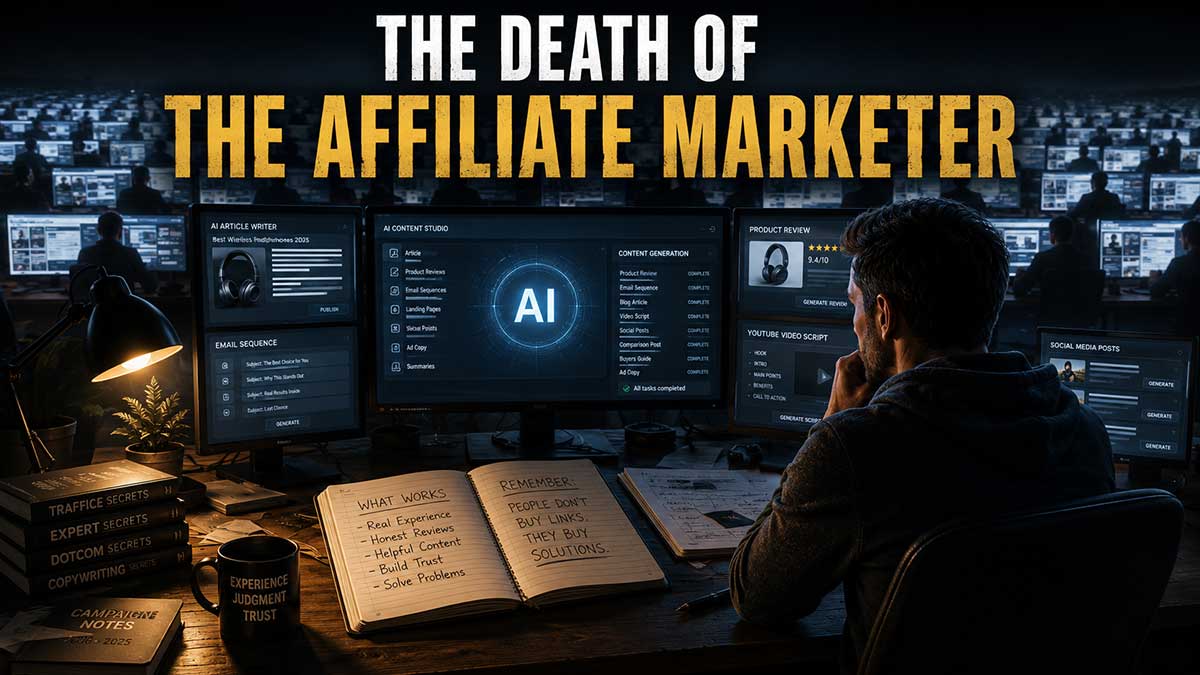
The Death of the Affiliate Marketer

I have been doing affiliate marketing for nearly two decades.
I have seen the business change many times.
I have seen new platforms rise, new traffic sources appear, search engines change their rules, email marketing evolve, and social media become central to online business.
Every few years, someone declares that affiliate marketing is dead.
Most of the time, they are wrong.
Affiliate marketing did not disappear when Google changed its algorithm. It did not disappear when Facebook reduced organic reach, or when YouTube became crowded, or when influencers took over social media.
But this time, something feels different.
AI has not simply introduced another marketing tool.
It has changed the value of many of the skills affiliate marketers depended on for years.
Writing articles, creating product reviews, researching offers, producing email sequences, designing images, writing scripts, and making videos can now be done faster than ever.
What once required a team can now be produced by one person in an afternoon.
At first, this seemed like a great opportunity.
Marketers who learned AI early gained speed.
They could create more content, test more ideas, and save money.
But once nearly every marketer gained access to the same tools, the advantage began to disappear.
That raises a difficult question.
If every affiliate marketer uses AI, where is the advantage?
The Public Story and the Private Reality

Online, it often appears that everyone is making more money than ever.
People post screenshots.
They announce record months.
They talk about AI helping them create businesses faster, generate more leads, and scale their income.
Some of those stories are real. Some marketers are doing extremely well.
Yet many experienced affiliate marketers I know seem to be earning less than they did before.
They may not talk about it publicly. They may continue posting success messages. They may promote the next tool or opportunity.
But behind the scenes, traffic is declining, conversions are weaker, email engagement is lower, and commissions are harder to maintain.
This creates a strange situation.
Publicly, AI appears to be creating a golden age for online marketers.
Privately, many marketers are wondering why their income is falling.
The gap between those two realities deserves more attention.
The Affiliate Marketer Who Used to Win

For many years, affiliate marketers had clear advantages.
They knew how to build websites. They knew how to rank articles. They knew how to write product reviews. They knew how to create email campaigns. They knew how to research keywords. They knew how to explain offers in a persuasive way.
They could do things the average person could not.
Those skills took time to learn. They required experience, patience, and technical knowledge.
A good affiliate marketer could enter a market, create useful content, attract search traffic, build an email list, and earn commissions.
The barrier to entry was not impossible, but it was high enough to protect those who had developed real skills.
AI has lowered that barrier.
Today, nearly anyone can produce a product comparison, email campaign, landing page, video script, social media post, or sales message.
The marketer who once had an advantage through production may now be competing against thousands of people who can produce similar material with a few prompts.
The skill has not disappeared.
Its rarity has.
AI Did Not Create an Advantage

When AI tools first became widely available, early users had an advantage.
They could work faster. They could write more. They could test ideas quickly. They could reduce outsourcing costs. They could enter new markets without hiring large teams.
That advantage was real.
But it was temporary.
Once everyone began using AI, the advantage shifted. Using AI became normal. It stopped being a unique ability.
The same thing happens with most technology. At first, the people who adopt it early gain an edge. Later, the technology becomes expected. At that point, using it is no longer enough.
The question changes from: How can I use AI? to: What becomes valuable now that everyone can use AI?
That may be the most important question for affiliate marketers today.
The Problem of Infinite Content

AI solved the problem of production at the exact moment production stopped being scarce.
For years, marketers believed that producing more content would lead to more traffic, more leads, and more sales. That was often true. Publishing ten articles gave you more chances to rank than publishing one. Sending more emails gave you more chances to reach customers. Creating more videos gave you more opportunities to be discovered.
Now everyone can produce more.
A single marketer can create dozens of articles, hundreds of social posts, and multiple videos in a short period.
The result is not a shortage of content. It is an overwhelming amount of it.
The internet is filling with articles that sound similar, videos that follow the same structure, emails that use the same persuasion patterns, and product reviews that offer little firsthand experience.
When content becomes nearly unlimited, each piece becomes less valuable.
More output does not automatically create more attention. More emails do not automatically create stronger relationships. More articles do not automatically create trust. More videos do not automatically create authority.
AI has made content creation easier.
It has made distinction harder.
The Search Model Is Changing
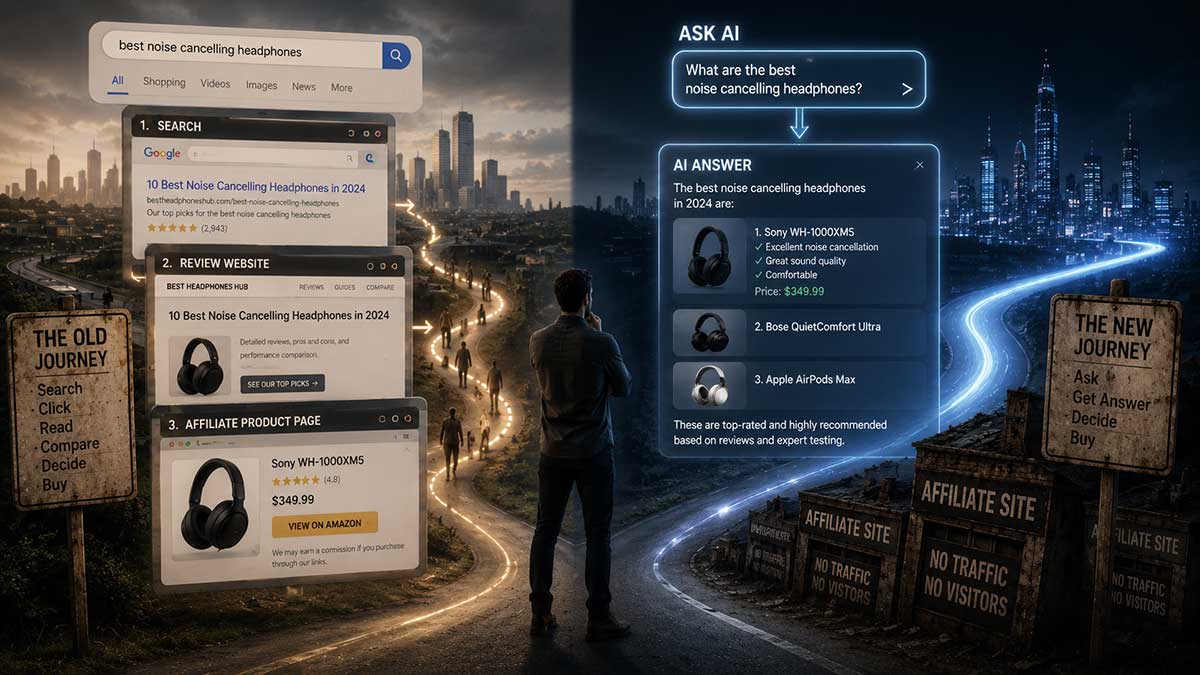
Traditional affiliate marketing depended heavily on search engines.
A customer searched for a product. They clicked an article. They read a review. They followed an affiliate link.
That model supported thousands of affiliate businesses.
Now people can ask AI tools direct questions. They can ask which product is best, compare several options, request a recommendation, and receive an answer without visiting multiple websites.
Search engines themselves are placing more answers directly on the results page.
This means the customer may receive enough information without clicking through to the affiliate marketer.
The traditional review article is becoming less central. A marketer may still rank, but fewer people may visit. A page may still receive traffic, but the traffic may be less ready to buy.
The customer's path is changing.
Affiliate marketers who depend on the old path may find that their traffic and income decline, even when their content quality remains the same.
The Trust Problem

AI has created another challenge.
People are becoming less certain about what they are reading.
Was the product actually tested? Did the writer really use it? Is the review based on experience, or was it created only to earn a commission?
Readers had these concerns before AI, but the problem is now much larger.
It is easy to create a polished review without touching the product. It is easy to sound knowledgeable without having experience. It is easy to publish persuasive content without a real opinion.
This makes trust more valuable.
A recommendation from a person with a known history carries more weight than an anonymous article. A real case study matters more than a generic explanation. A personal story matters more than a summary. A clear opinion matters more than neutral language.
The more synthetic content people see, the more they may value evidence that a real person is behind the message.
The Death of the Middle
The biggest change may be happening in the middle of the market.
At one end, large brands have authority, budgets, data, teams, and established audiences. At the other end, individual creators have loyal followers, distinct personalities, and direct relationships with their audiences.
In the middle are affiliate marketers who rely on competent but replaceable content.
They may know SEO. They may write good reviews. They may build solid websites. They may produce useful material.
But if their work looks similar to thousands of other websites, they face growing pressure.
This middle group once had room to earn dependable income.
AI may be reducing that space.
The strongest marketers may grow larger. The weakest may disappear. The average marketer may struggle to be seen.
AI may not eliminate affiliate marketing. It may eliminate the comfortable middle where capable marketers once earned a living through work that was good, but not distinct.
The Replaceable Affiliate Marketer
The greatest risk is not being an affiliate marketer.
The greatest risk is being replaceable.
A replaceable affiliate marketer depends on generic product reviews, borrowed traffic, routine SEO, interchangeable recommendations, content that could have been created by anyone, promotions with little personal connection, and offers chosen mainly for commission size.
This marketer may use AI well. They may publish often. They may follow every new strategy.
But if their audience has no reason to remember them, their business remains fragile.
Someone else can publish the same article. Someone else can promote the same product. Someone else can send the same kind of email. Someone else can use the same AI tools.
When the marketer becomes interchangeable, price, speed, and volume become the main forms of competition.
That is a difficult game to win.
What AI Cannot Easily Replace
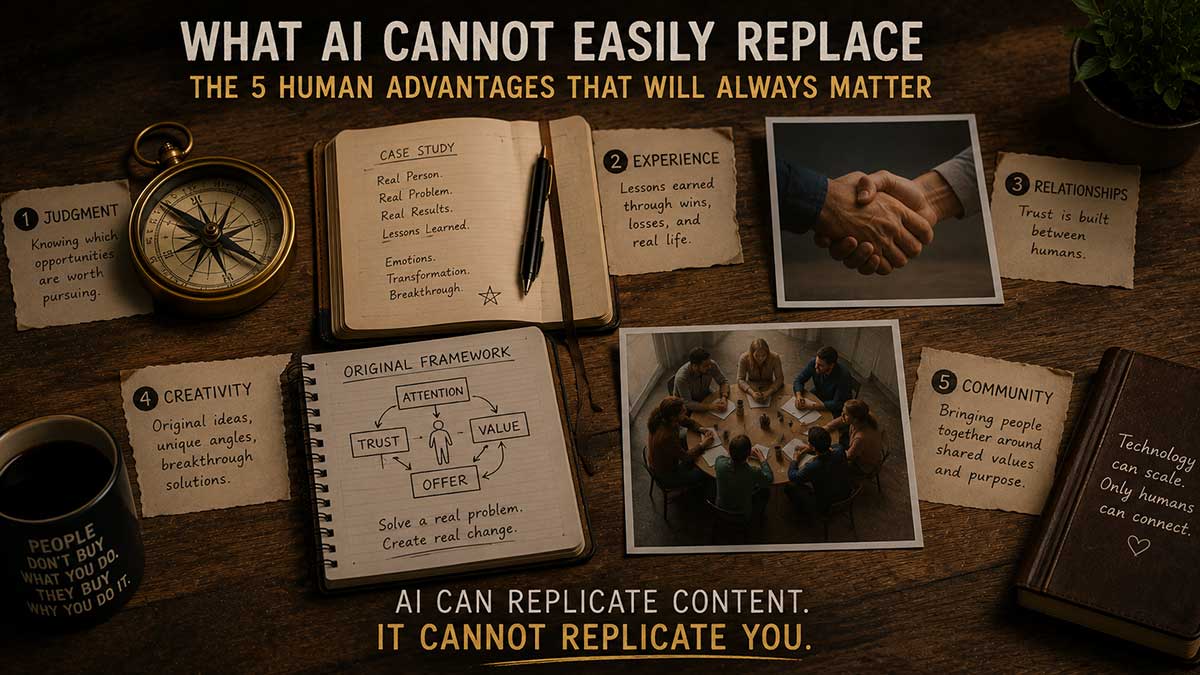
AI can create content. It can summarize information. It can organize ideas. It can produce drafts. It can help marketers work faster.
But several things remain difficult to replace.
Lived experience carries weight. A marketer who used a product for years can explain what worked, what failed, and what they would do differently. A marketer who has earned real results can provide evidence. A marketer who has lost money can warn people about mistakes. A marketer who has spent years in a market can notice patterns that a new entrant will miss. AI can imitate the language of experience. It cannot live the experience.
Judgment may become one of the most valuable skills in marketing. Knowing what to promote. Knowing what to reject. Knowing which trend will last. Knowing when a claim is exaggerated. Knowing when a product does not deserve the audience's trust. These decisions come from experience, values, and pattern recognition. AI can provide options. The marketer still needs to decide which option matters.
Trust is built through consistency. It grows when a marketer recommends good products, admits uncertainty, criticizes weak offers, and protects the audience. Trust cannot be produced through volume alone. It comes from a history of being honest. When people trust the marketer, the recommendation matters. When they do not, even excellent copy may fail.
A unique framework is harder to copy than an article. It gives the audience a way to think. It helps people see a problem differently. It becomes associated with the person who created it. A marketer with a known method is more difficult to replace than a marketer who publishes general information. This is where long experience can become an advantage. Years of work can be turned into systems, models, principles, and methods that AI alone would not have developed. I'll come back to one framework in particular later in this piece — it's the clearest example I have of this from my own career.
An email list is not simply a collection of addresses. A community is not simply a group of followers. A relationship is built when people repeatedly receive value from the same person. Affiliate marketers who own a direct connection with their audience are in a stronger position than those who depend entirely on search engines or social platforms. Platforms can change. Relationships are harder to remove.
The New Affiliate Marketer
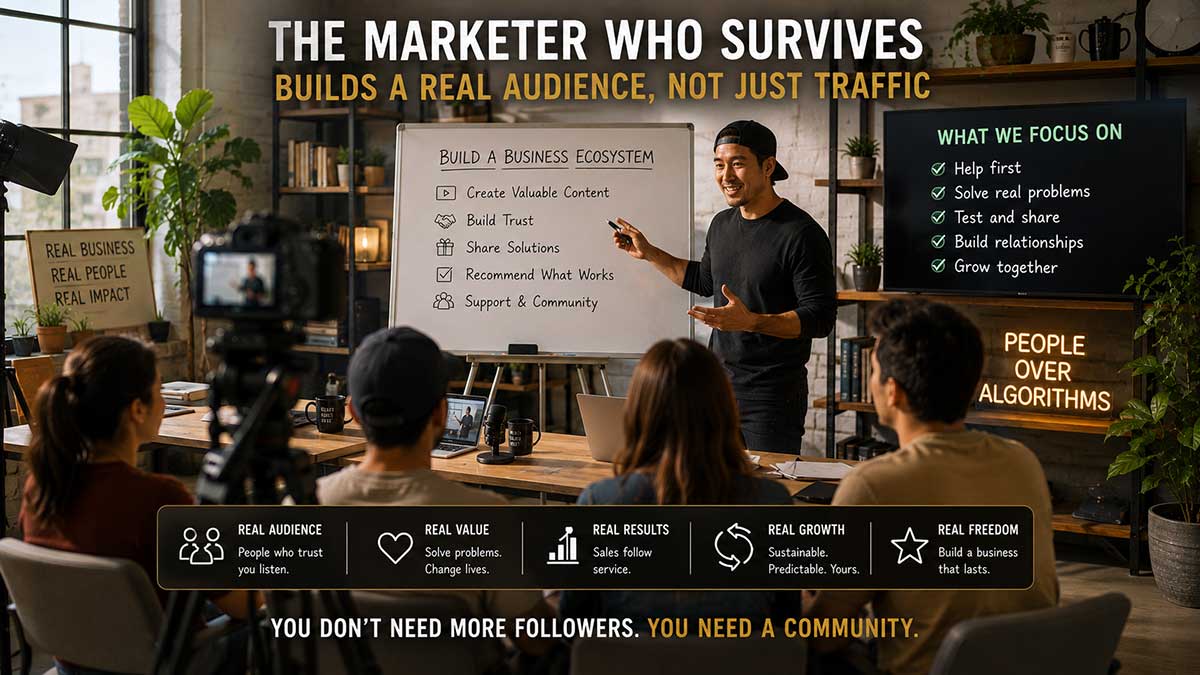
The affiliate marketer of the future may not look like the affiliate marketer of the past.
The old model was simple: find a product, create content, rank for keywords, send traffic, earn commissions.
The newer model may look more like this: build expertise, solve a meaningful problem, develop a point of view, earn trust, create a direct audience, recommend products that fit the solution.
In this model, affiliate income becomes part of a larger business. The marketer may create courses, communities, consulting, newsletters, tools, books, or events. Affiliate offers remain useful, but they are no longer the entire identity.
The marketer is known for the problem they solve, not the links they promote.
A webinar expert may recommend software. A fitness coach may recommend equipment. A traveler may recommend hotels. A business owner may recommend AI tools.
The recommendation works when it supports a larger mission.
Differentiation Cannot Be Added at the End

Many marketers create ordinary content and then try to make it different at the end. They add a personal story. They change the headline. They add humor. They adjust the tone.
But true differentiation starts much earlier. It shapes the topic. It shapes the question. It shapes the research. It shapes the opinion. It shapes the audience. It shapes the offer.
Differentiation is not a final editing step. It is the reason the content exists.
The strongest content often begins with a question that the marketer genuinely cares about. It may challenge a common belief. It may come from personal experience. It may say something others are unwilling to say. It may connect ideas that are usually kept separate.
AI can help express that idea. It cannot supply the personal reason the idea matters.
My Own Reflection After Nearly Two Decades
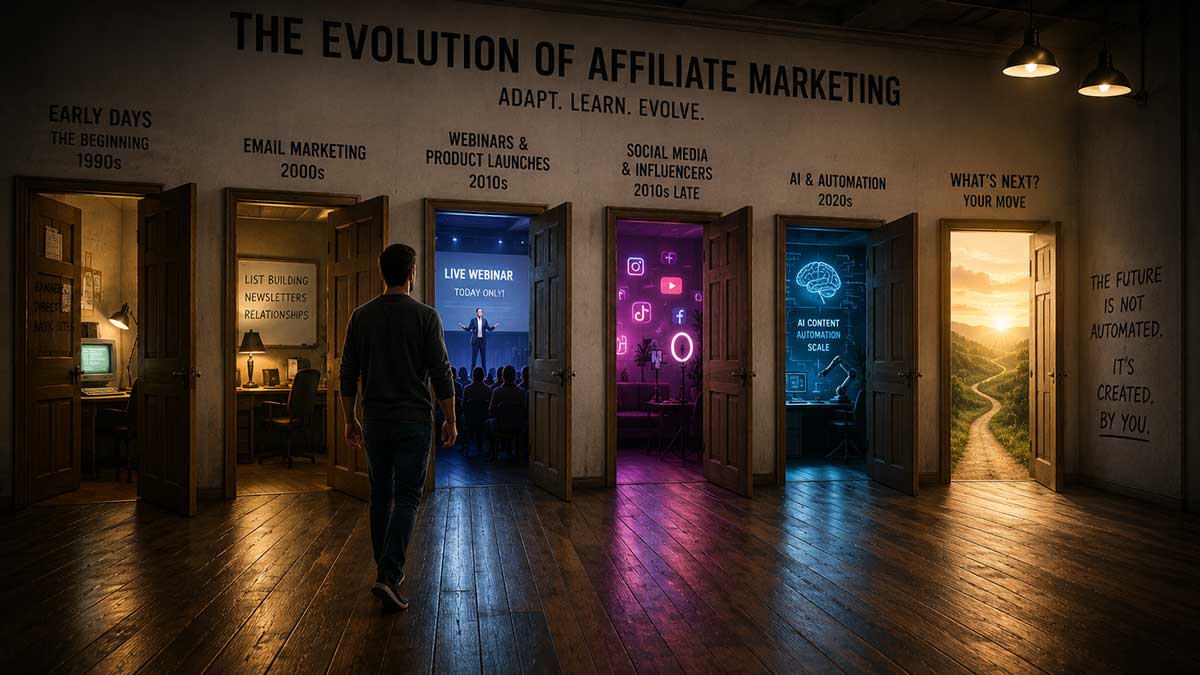
After nearly twenty years in affiliate marketing, I no longer believe the greatest skill is producing content. I do not believe success comes from knowing the newest tool. I do not believe speed alone creates an advantage.
The greater skill is knowing what people need. It is knowing what they fear. It is knowing what they hope for. It is knowing what deserves their attention. It is knowing what deserves their trust.
I have seen marketers succeed with weak products and strong promotion. I have seen good products fail from poor positioning. I have seen traffic disappear overnight. I have seen email lists outperform websites. I have seen trends create fortunes and then vanish.
But one skill has quietly outperformed everything else I've tried: understanding how a person moves from curiosity to a buying decision, in real time, in front of an audience. Almost every result I'm proud of in this business traces back to that one skill, more than to any traffic source or tool.
The longer I stay in this business, the more I believe that tools change faster than human nature.
People still want relief from pain. They still want hope. They still want certainty. They still want progress. They still want someone they can trust.
AI can help explain those desires. It does not remove them.
Questions Every Affiliate Marketer Must Ask

What do I know from experience that most people do not? What problem have I spent years learning to solve? Why should someone trust my recommendation? What can readers receive from me that they cannot receive from an AI summary? Am I building an audience or borrowing traffic? Do people remember my name, my framework, or only the product? Would my business survive if search traffic disappeared? Am I producing more content, or creating more value?
These questions are harder than learning a new tool. They may be far more valuable.
The Marketer Who Survives

The marketer who survives the AI shift may not be the one who publishes the most.
It may be the one who is most trusted.
This marketer has a clear point of view. They share real experience. They create recognizable frameworks. They use AI without sounding interchangeable. They choose offers carefully. They build direct relationships with readers. They become known for solving a meaningful problem.
They may use AI every day. But AI is not their identity. It is a tool serving a larger purpose.
Affiliate marketing is not disappearing. People will keep buying products. Companies will keep paying commissions. Creators will keep recommending tools, services, books, software, courses, and products.
But the old advantage is fading.
The marketer who depended on generic reviews, borrowed traffic, routine SEO, and interchangeable content is becoming easier to replace.
The marketer who brings judgment, experience, trust, original thinking, and a direct relationship with an audience may become more valuable.
The affiliate marketer is not dying. The replaceable affiliate marketer is.
Where Affiliate Marketers May Need to Return
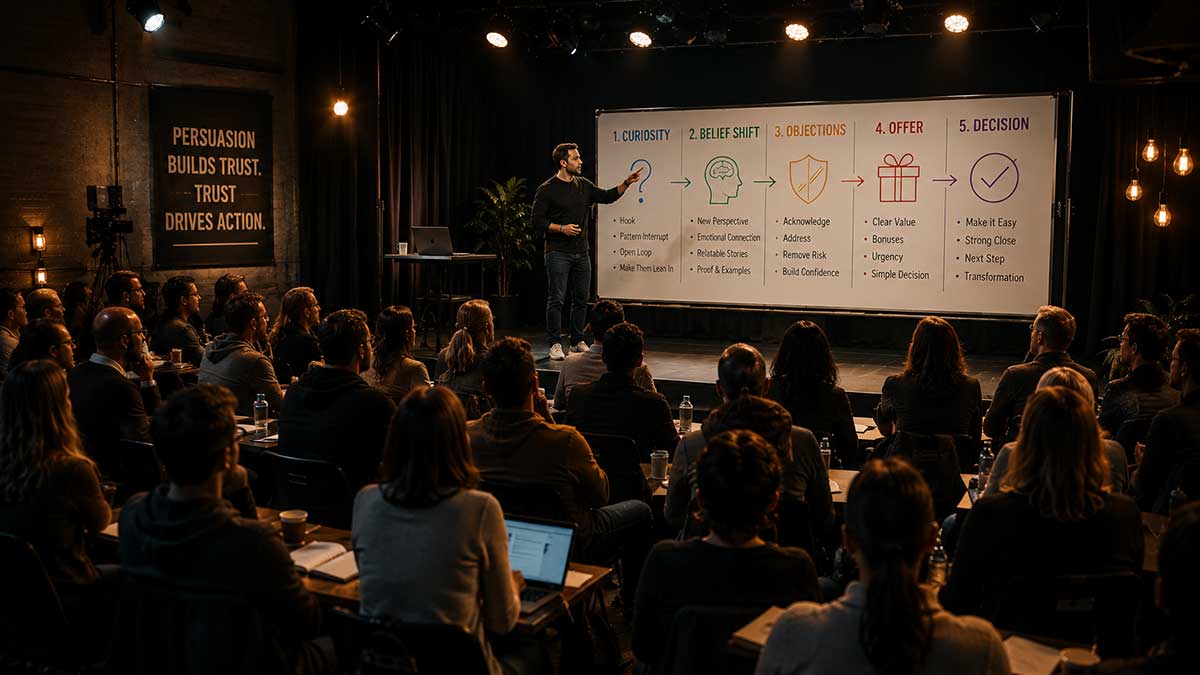
So if judgment, trust, and original frameworks are what AI can't touch, where does a marketer actually go to rebuild those?
Not another AI tool. A return to the deeper skills that caused people to buy in the first place: positioning, storytelling, buyer psychology, offer creation, trust — the ability to take one idea, explain why it matters, and move people from curiosity to action.
Those skills were valuable before AI. I'd argue they're worth more now, precisely because they're the hardest thing to fake.
This is why, of everything I've studied in twenty years, I keep returning to Jason Fladlien's webinar method — the framework behind the "one skill" I mentioned earlier, the one that's quietly outperformed every traffic source or tool I've used. I've personally generated more than $1.7 million using its principles.
What made it work was never the software or the slides. It was the structure — entering the conversation already taking place in the buyer's mind, changing how they viewed the problem, addressing resistance, and presenting an offer that felt like the logical next step. AI can write a webinar script. It can suggest headlines, bullets, and stories. But without a real grasp of buyer psychology, the result still feels empty — which is exactly the gap this piece has been describing.
That's why I think Jason's GOAT Webinar Coaching Recordings are worth studying, especially for marketers trying to become less replaceable. They're not really about hosting webinars. They're about learning to communicate value, structure an argument, overcome objections, and turn attention into a decision — lessons that carry into emails, sales pages, videos, launches, and affiliate promotions alike.
For affiliate marketers watching traffic decline while AI competition grows, that may be the real opportunity. Not producing more content. Learning how to make the content matter.
You can learn more about Jason Fladlien's GOAT Webinar Coaching Recordings here
The marketer who survives won't be the one with the fastest AI tool.
So the real question isn't which AI tool to learn next — it's which of your own skills you'd bet on if AI could do everything else.

Leave a Reply