
An AI tool can build a dropshipping page in less than two minutes. Unfortunately, it can build a beautiful page for a terrible product just as quickly.
That is where many beginners lose money. They find an item with millions of TikTok views, assume views equal demand, connect a supplier they have never tested, and start advertising before calculating what one sale is actually worth.
The real skill is not building the store. It is finding the right product before the market becomes overcrowded, confirming that people want to buy it, and knowing when the numbers say to walk away.
PagePilot can generate a Shopify product-page draft from a product URL. Shopify can handle the store, checkout, and orders. A dropshipping supplier can ship the product to your customer. Yet none of those services decides whether you selected a good product or built a profitable offer.
This guide covers the complete process in 10 steps, including product research, trend validation, supplier testing, startup costs, PagePilot, Shopify, organic content, paid advertising, customer support, and scaling.
A warning about social-media income claims: The video that inspired this article says a woman made “$97 million in two years,” yet the quoted creator says she earns $10,000 to $15,000 per month. The supplied material offers no evidence for the $97 million statement. Revenue, business profit, and personal income are separate numbers. A car, house, or sales screenshot does not verify profitability.
What AI Dropshipping Really Automates
Dropshipping is an ecommerce model in which your store accepts the customer’s order and a third-party supplier ships the product. You do not keep bulk inventory at home, but you remain responsible to the customer.
AI tools can help draft product descriptions, create page layouts, modify images, suggest marketing angles, and generate advertising concepts. They reduce production time, but they do not remove the seller’s responsibilities.
AI cannot reliably:
- Verify product quality
- Confirm that a supplier will ship on time
- Prove that a marketing claim is legal
- Predict long-term demand
- Resolve customer disputes
- Make unprofitable numbers profitable
- Replace original photographs and product testing
The best approach is to use AI for speed and human judgment for selection, verification, and risk.

Step 1: Choose One Customer and One Visible Problem
Do not start by collecting unrelated products. Choose a customer group whose problems, language, and buying habits you can study.
Possible markets include:
- Pet owners dealing with hair and cleanup
- People organizing small homes or apartments
- Parents preparing quick lunches
- Frequent travelers
- Journal and craft enthusiasts
- Home-office workers
- Drivers trying to keep cars organized
- People looking for affordable gifts
Ask these questions:
- Who experiences this problem?
- How often does the problem occur?
- Is the frustration strong enough to inspire a purchase?
- Can the solution be demonstrated within several seconds?
- Would the same customer buy related products later?
- Can you produce at least 20 original content ideas about it?
A visible problem is easier to market than a vague benefit. Pet hair disappearing from a sofa can be shown immediately. “Improves your lifestyle” cannot.
The Example Used Throughout This Guide
To make each step concrete, we will follow one hypothetical product: a reusable pet-hair remover for couches, clothing, bedding, and car seats.
This does not mean pet-hair removers are guaranteed winners. It is an example of the type of product worth investigating:
- The problem is common and easy to recognize.
- The result can be demonstrated visually.
- The item is usually small and inexpensive to ship.
- It has no sizing problem.
- Pet owners can become repeat customers for related items.
- The product can be shown in many locations and situations.
Step 2: Find Viral Products Before the Opportunity Disappears
Typing “viral products” into TikTok is only the beginning. By the time an item appears in hundreds of roundup videos, many sellers may already be offering the same product with identical content.
The better approach is to combine recent social momentum, longer-term search interest, marketplace sales evidence, buyer complaints, competition, and supplier economics.

Understand TikTok’s Three Possible Roles
TikTok can serve three different purposes:
- Product research: Discover what shoppers are watching, searching for, and ordering.
- Traffic: Publish organic videos or advertisements that send visitors to Shopify.
- Marketplace checkout: Eligible sellers can list products directly through TikTok Shop.
This guide uses TikTok mainly for research and marketing, with Shopify operating as the primary store and checkout. Eligible merchants may connect Shopify and TikTok Shop later.
Use TikTok Shop Product Opportunities
TikTok Shop’s Product Opportunity Insights lets eligible US sellers examine search and order volume across 30- and 60-day periods.
TikTok’s Product Opportunity Radar uses seven-day marketplace information to find recent search terms and product opportunities for eligible sellers.
Inside Seller Center, look under Growth or Product Opportunities. The Product Opportunity Radar may appear for selected accounts.
Search for problems and product families, not just a single product name. For the example product, you might search:
- Pet hair remover
- Dog hair cleaner
- Cat hair couch
- Reusable lint remover
- Car-seat pet hair
The seven-day view helps identify acceleration. The 30- and 60-day views help determine whether demand existed before the latest spike.
TikTok documents these features in its Product Opportunity Insights announcement and Product Opportunity Radar guide.
Look for rising searches, meaningful orders, and a shortage of strong listings. Treat every platform suggestion as a research lead, not a guaranteed opportunity.
Study TikTok Videos and Advertisements
Use TikTok’s Creative Center, Top Ads, and Seller Center’s Get inspired section to examine successful content within your category.
Record:
- When the earliest successful posts appeared
- Whether new posts are still gaining attention
- Views, comments, shares, and saves
- Questions shoppers repeatedly ask
- Complaints from people who purchased
- Number of sellers using the same footage
- Number of creative angles being used
- Whether the comments show buying intent
“Where can I order this?” shows more purchase intent than a laughing emoji. Questions about price, shipping, colors, or compatibility can reveal genuine interest.
For the pet-hair-remover example, useful buying questions might include:
- Does it work on car upholstery?
- Can it remove cat hair from a velvet couch?
- Does the product damage delicate fabric?
- How do you clean it?
- Is it better than disposable lint rollers?
Those questions can later become product-page sections and video topics.
Check Google Trends
Enter the product topic in Google Trends and select the country where you plan to sell.
Review:
- Past 90 days
- Past 12 months
- Past five years
- Related topics
- Rising searches
- Regional interest
Compare different product names. Shoppers might search “pet hair remover,” “dog hair remover,” “lint remover,” or “pet hair roller” for similar solutions.
Look for four patterns:
| Pattern | What it means | Possible action |
|---|---|---|
| Steady demand | Interest remains consistent | Good candidate for a lasting store |
| Seasonal demand | Interest returns at predictable times | Prepare before the seasonal peak |
| Gradually rising demand | Interest grows over weeks or months | Attractive time for deeper testing |
| Spike followed by collapse | Interest explodes and falls quickly | High risk for a late seller |
Some impulse products begin on social platforms and show limited Google activity. That does not automatically reject them, but stronger evidence will be needed from TikTok orders, marketplace sales, or a small test.
Use Amazon Movers & Shakers and Best Sellers
Amazon Movers & Shakers shows products with large sales-rank gains during the previous 24 hours. Amazon Best Sellers shows established category demand.
Movers & Shakers can expose recent acceleration. Best Sellers can show whether a category has deeper and more stable demand.
Read one-star, two-star, and three-star reviews. Look for:
- Products that break quickly
- Handles that feel uncomfortable
- Items that do not work on certain fabrics
- Difficult cleaning
- Misleading product dimensions
- Poor packaging
- Missing instructions
- Features customers wish were included
Negative reviews can prevent a bad decision. They can reveal an opportunity to choose a better supplier or create a better bundle.
Review Shopify’s Current Product Data
Shopify’s 2026 merchant data identifies strong categories that include apparel, skin care, makeup, motor-vehicle parts, arts and crafts, bedding, hats and accessories, and kitchen appliances.
Shopify’s dropshipping research points to kitchen and dining, pet supplies, home décor, office products, tools and home improvement, phone accessories, and car accessories. Shopify lists pet-hair removers among the products worth researching within pet supplies.
See Shopify’s 2026 trending-products report and 2026 dropshipping-product guide.
High category demand does not prove that one product will succeed. It tells you where deeper research may be worthwhile.
Use Etsy to Find Emotional and Aesthetic Trends
Etsy can reveal trends connected to gifting, personalization, hobbies, journals, accessories, and visual styles.
Its spring and summer 2026 trend report showed rising searches for:
- Whimsical jewelry
- Polka-dot phone cases
- Mahjong accessories
- Beginner needlepoint kits
- Traveler journals
- Journal charms
- Leather journal covers
- Memory journals
The larger lesson is not to copy those products. The data points to interest in screen-free hobbies, playful design, tactile rituals, and personalized objects.
See the Etsy 2026 trend report.
The 20-Minute Viral Product Search
Use this routine to screen each product idea quickly.
Minutes 1 Through 5: TikTok
- Search the product and the problem it solves.
- Focus on recent posts.
- Save five videos gaining attention.
- Record common buying questions and complaints.
- Count how many sellers use identical content.
Minutes 6 Through 10: Google Trends
- Compare three possible product names.
- Review the past 12 months and five years.
- Identify steady, seasonal, rising, or collapsing interest.
- Check rising related searches.
Minutes 11 Through 15: Amazon
- Review Movers & Shakers and Best Sellers.
- Record common prices and review volume.
- Read at least 10 negative or mixed reviews.
- Write down the three most common defects.
Minutes 16 Through 20: Competition and Economics
- Search Google Shopping, TikTok Shop, Walmart, Temu, and other relevant marketplaces.
- Record typical selling prices and shipping promises.
- Estimate the supplier’s delivered cost.
- Decide whether the product deserves several hours of deeper research.
This routine is a filter. It does not replace supplier samples or a real market test.
Product Areas Worth Researching in 2026
These are research directions, not promised winners.
| Product area | Examples to investigate | Main strength | Main caution | Beginner fit |
|---|---|---|---|---|
| Kitchen organization | Lunch boxes, oil dispensers, storage containers, organizers | Broad demand and easy demonstrations | Food-contact materials and leakage | Strong |
| Pet convenience | Hair removers, poop-bag holders, slow feeders, snuffle mats, pet water bottles | Emotional audience and visual results | Avoid ingestibles and unsafe designs | Strong |
| Home organization | Non-slip hangers, laundry baskets, storage tools, cable organizers | Clear before-and-after content | Bulky items can cost more to ship | Strong |
| Journaling and crafts | Journal charms, memory journals, covers, beginner craft kits | Giftable and connected to screen-free hobbies | Generic copies face price competition | Strong |
| Travel organization | Travel bottles, toiletry organizers, packing accessories | Compact and easy to bundle | Strong competition | Strong to moderate |
| Drink accessories | Bottle slings, ice molds, tumblers, latte mixers | Visual and giftable | Crowded market and design rights | Moderate |
| Phone accessories | Cases, stands, organizers, decorative accessories | Large audience | Compatibility errors and saturation | Moderate |
| Car accessories | Organizers and non-safety cleaning tools | Strong problem-and-solution content | Avoid safety-related and electrical items | Moderate |
| Apparel accessories | Hats, bags, belts, scarves | Fewer sizing problems than clothing | Fashion changes and design rights | Moderate |
| Clothing | Shirts, hoodies, activewear, pants | Large established demand | Sizing, returns, quality, and saturation | Moderate to weak |
| Beauty tools | Brushes, hair curlers, face rollers, travel bottles | Strong video potential | Hygiene, reactions, claims, and quality | Weak for a first store |
| Skin care and supplements | Moisturizers, pimple patches, vitamins, herbal products | High demand | Regulation, ingredients, claims, and liability | Poor for most beginners |
The best beginner product is often lightweight, non-fragile, non-ingestible, inexpensive to ship, easy to demonstrate, and unlikely to create sizing or safety problems.
Step 3: Decide Whether the Product Is Too Early, Ready, or Too Late
A viral product has a window. Enter too early and demand may never develop. Enter too late and advertising costs, supplier prices, and competition may already be rising.
Use this timing table:
| Signal | Too early | Promising time | Probably late |
|---|---|---|---|
| TikTok videos | One isolated viral post | Several recent creators gaining traction | Hundreds of identical advertisements |
| Google Trends | Little measurable interest | Multiweek growth or stable demand | Sharp peak followed by decline |
| Competition | Few sellers and no purchase proof | Demand exists with weak competitors | Heavy price cutting by established sellers |
| Suppliers | Few uncertain sources | Several dependable choices | Stock shortages and rising prices |
| Creative opportunity | One obvious video idea | Many original demonstrations | Every hook and demonstration looks copied |
| Buyer comments | Curiosity without purchase questions | Questions about price, shipping, and use | Complaints about seeing the product everywhere |
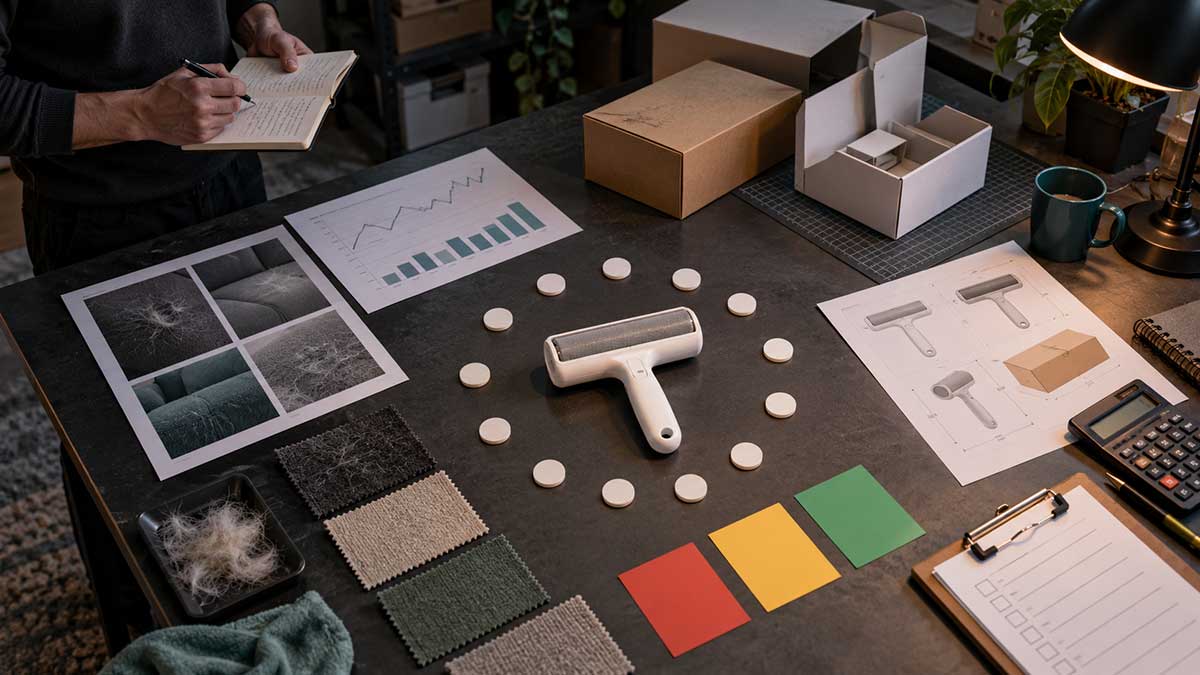
Score Every Product Out of 60
Give each factor a score from one to five:
- Recent momentum
- Demand across several sources
- Buying intent
- Visual demonstration
- Competition level
- Differentiation opportunity
- Gross-margin potential
- Shipping speed and cost
- Product quality
- Return risk
- Content depth
- Legal and safety risk
Use these guidelines:
- Below 40: Reject it or conduct more research before spending money.
- 40 through 47: Consider ordering samples if no serious risk appears.
- 48 through 60: Give it priority for supplier and sample testing.
- Any safety, legal, quality, or shipping score below three: Reject it regardless of the total.
This score does not predict success. It creates a consistent decision process and makes it harder to fall in love with a product after seeing one exciting video.
Apply the Score to the Pet-Hair-Remover Example
Suppose the research produces these results:
- Recent pet-hair videos are gaining views.
- Google searches have remained stable rather than collapsing.
- Amazon listings show meaningful review volume.
- Customers complain that many products are difficult to clean.
- Several suppliers offer similar versions.
- The product can be demonstrated on couches, clothing, bedding, stairs, and cars.
- The item appears inexpensive to ship.
This might justify a score above 40 and the purchase of samples. It does not justify building the full store yet.
Step 4: Find Dependable Suppliers and Order Samples
Compare at least three suppliers for every finalist. Supplier-app ratings are useful, but they do not replace direct questions and sample orders.
Ask:
- Is the product in stock now?
- Where is it stored?
- What are the processing and delivery times for US customers?
- Is end-to-end tracking included?
- What happens when an item is lost, damaged, or incorrect?
- Who pays for replacements and returns?
- Does the package include supplier prices or promotions?
- Can inventory and tracking synchronize with Shopify?
- Can the supplier handle a sudden increase in orders?
- How quickly does support respond?
Order samples from the two strongest suppliers using the shipping option your customer would receive.
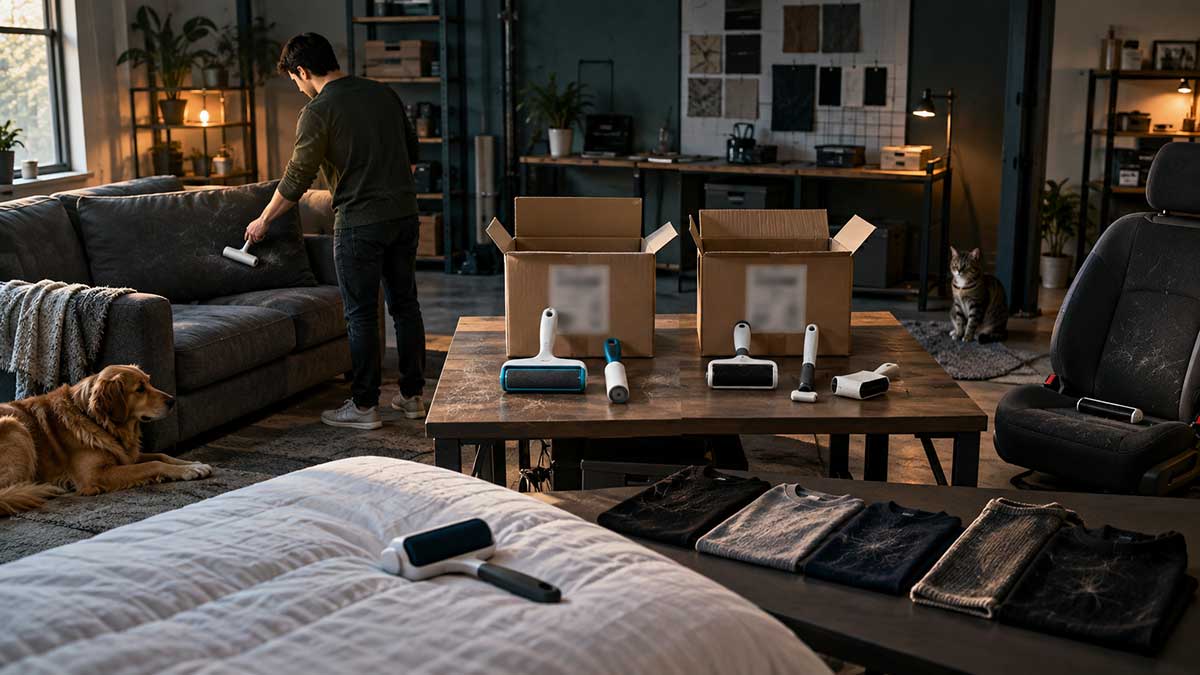
For the pet-hair remover, test:
- Couch fabric
- Car upholstery
- Bedding
- Clothing
- Short and long pet hair
- Product cleaning
- Handle strength
- Material durability
- Packaging quality
- Tracking accuracy
Film the unboxing and tests. Original footage is more credible than AI-created lifestyle images and gives you material for organic videos and advertisements.
Do not sell an item you would feel uncomfortable giving to a family member.
Check Legal and Safety Risk
Search for trademarks, patents, copied designs, recalled products, required certifications, safety warnings, and advertising restrictions.
Beginners should be cautious with supplements, medical products, skin-care treatments, children’s safety items, ingestible goods, batteries, counterfeit brands, and products that could cause injury.
AI-created claims remain your advertising when you publish them. The Federal Trade Commission requires advertising to be truthful, non-deceptive, and supported by evidence. Fake or AI-generated reviews presented as genuine customer experiences are prohibited.
Review the FTC’s advertising guidance and consumer-review guidance.
Step 5: Calculate the Real Profit and Startup Budget
Never calculate profit by subtracting the supplier price from the selling price.
Use this equation:
Contribution profit per order equals selling price minus product cost, supplier shipping, payment fees, refund and chargeback reserve, app allocation, and customer-acquisition cost.
Suppose the pet-hair remover sells for $29.99:
| Item | Amount |
|---|---|
| Customer payment | $29.99 |
| Product cost | -$5.50 |
| Supplier shipping | -$3.50 |
| Payment processing estimate | -$1.17 |
| Refund and chargeback reserve | -$1.50 |
| App cost allocation | -$1.00 |
| Customer-acquisition cost | -$9.00 |
| Estimated contribution profit | $8.32 |
This is a hypothetical example, not a forecast.
If your acquisition cost rises from $9 to $18, the same order loses money. A large Shopify revenue number can hide this problem.
Build three projections:
- Best case
- Expected case
- Stress case
Do not scale a product that loses money under reasonable expected conditions.
A Realistic Beginner Startup Budget
| Expense | Possible range |
|---|---|
| Product samples | $30 to $150 |
| Domain | $10 to $25 per year |
| Shopify | Current plan price |
| PagePilot | Starting from its current listed price |
| Supplier or fulfillment apps | Free to paid |
| Basic original-content setup | $0 to $200 |
| Controlled advertising test | $200 to $1,000 |
| Refund and chargeback reserve | $200 to $500 |
| Approximate testing budget | $500 to $2,000 |
These ranges will vary. You can conduct product research for almost nothing, but running and testing a credible store is rarely free.
Complete the Basic Business Setup
Requirements depend on your location. Common tasks include:
- Choose a business structure.
- Register the business name when required.
- Check sales-tax, license, and permit requirements.
- Open a separate bank account.
- Create a bookkeeping system.
- Consider product-liability insurance.
- Create a dedicated support email.
- Reserve money for taxes, refunds, supplier charges, and disputes.
The SBA business guide and IRS recordkeeping guidance provide useful starting points. Check state and local requirements for your business.
Step 6: Build Shopify and Connect the Fulfillment Supplier
Create your Shopify account and choose the lowest plan that supports the test you intend to run. Confirm current pricing and payment-processing rates at signup.
Set up:
- Store name
- Domain
- Business contact information
- Payment processing
- Store currency
- Target countries
- Shipping zones
- Tax settings
- Customer emails
- Order tracking
- Analytics
- Advertising pixels
- Two-factor authentication
Install the supplier or fulfillment app from the Shopify App Store.
Check every connection:
- Product variants match the correct supplier variants.
- Inventory updates properly.
- Retail prices cannot be accidentally overwritten.
- Shipping methods and charges are accurate.
- Customer addresses transfer correctly.
- Tracking numbers return to Shopify.
- Out-of-stock products stop selling.
- Automatic fulfillment is configured as intended.
For the pet-hair remover, make sure color or size variants map to the correct supplier product. Approve the first orders manually so you can catch address, payment, variant, or fraud problems before shipment.
Step 7: Use PagePilot to Create the Product Page Draft
The original social video suggests copying a TikTok product-page link and pasting it directly into PagePilot. That instruction needs clarification.
TikTok is useful for discovering the product. Current PagePilot materials describe generating pages from product or marketplace links such as AliExpress, Amazon, and Shopify.
After discovering the product on TikTok, locate the same product through your chosen supplier or a supported reference page. Use that URL inside PagePilot.
The basic workflow is:
- Copy the supplier or supported reference-product URL.
- Paste the URL into PagePilot.
- Select your Shopify store.
- Choose the language, layout, and marketing angle.
- Generate the draft product page.
- Review and rewrite every section.
- Publish the corrected page to Shopify.
PagePilot currently lists plans beginning at $39 per month. Check PagePilot’s current pricing before subscribing.
Never Publish the First AI Draft Without Reviewing It
Verify every:
- Material
- Measurement
- Compatibility claim
- Product benefit
- Guarantee
- Shipping promise
- Testimonial
- Safety statement
- Image
For the pet-hair remover, the page might include:
- A headline showing the primary problem
- Original video of hair being removed from a couch
- Demonstrations on several surfaces
- Instructions for cleaning the product
- Materials and dimensions
- Surfaces that should not be used
- Shipping and tracking information
- Genuine reviews collected from real customers
- Refund and support details
Do not publish copied photographs, third-party branding, scraped testimonials, false purchase notifications, invented stock warnings, or countdown timers that restart.
Step 8: Add Policies, Test Every Transaction, and Prepare Support
Publish:
- Shipping policy
- Return and refund policy
- Privacy policy
- Terms of service
- Contact page
- Tracking instructions
- Frequently asked questions
Shopify offers a store-policy setup guide. Generated policy templates still need review for your store and jurisdiction.
State processing and delivery times your supplier can meet.
Under the FTC’s Mail, Internet, or Telephone Order Merchandise Rule, sellers need a reasonable basis for advertised shipping times.
If no shipping time is provided, the rule uses 30 days. Delays may require customer consent or a refund.
Test the Complete Order Path
Test on mobile and desktop:
- Product selection
- Variants
- Add to cart
- Discount code
- Shipping charge
- Tax calculation
- Payment
- Confirmation email
- Supplier order receipt
- Tracking update
- Delivery notice
- Cancellation and refund
- Support form
Place a real low-cost order if needed to confirm the supplier connection.
Prepare support replies for address changes, tracking delays, damaged products, incorrect items, missing packages, cancellations, returns, and refunds.
The customer purchased from you, not your supplier. You own the problem when fulfillment fails.
Step 9: Test Organic Content Before Spending Heavily on Advertising
Organic marketing still costs time, samples, and production effort. It can test hooks with less financial exposure than launching paid advertisements immediately.
For the pet-hair remover, content angles could include:
- Couch-cleaning demonstration
- Car-seat transformation
- Disposable lint roller comparison
- Cat hair versus dog hair
- Five surfaces tested
- Product-cleaning tutorial
- Honest first-use reaction
- Common customer question
- Mistakes people make when removing pet hair
- Gift idea for a pet owner
TikTok’s seller guidance recommends studying high-performing category videos, opening with a strong hook, showing the product from several angles, demonstrating benefits, and giving the viewer a clear next action.
See TikTok’s shoppable-video guide.
Do not download another creator’s video and advertise it as your own. Film your sample, license footage, or obtain written permission. Disclose paid or gifted endorsements clearly.
Track:
- Hook
- Content angle
- Watch time
- Completion rate
- Shares
- Saves
- Profile visits
- Product-page clicks
- Add-to-carts
- Purchases
- Refunds
High views with few clicks may indicate entertainment without buying interest.
Clicks without add-to-carts may reveal a weak offer, price, page, or audience match.
Add-to-carts without purchases may expose shipping costs, payment problems, weak trust, or checkout friction.
Set a Paid-Advertising Loss Limit
Before starting paid traffic, decide:
- Total test budget you can afford to lose
- Maximum acquisition cost
- Number of creative variations
- Test period
- Conditions for stopping an advertisement
- Conditions for producing more content
- Conditions for raising the budget
If the pet-hair remover leaves $17.32 before advertising and you want at least $8 profit, your target acquisition cost is about $9.32 or less.
Paying $15 to acquire the customer may produce revenue, but it would miss the profit goal.
Test several original creatives. Change one major variable at a time so you can identify what caused the result.
Step 10: Stop Weak Products and Scale Proven Products Carefully
Judge the complete operation, not daily revenue or video views.
| Metric | What it may reveal |
|---|---|
| Watch time | Strength of the opening and demonstration |
| Click-through rate | Interest in the offer |
| Add-to-cart rate | Product desire and page quality |
| Checkout completion | Trust, shipping, payment, and checkout performance |
| Conversion rate | Traffic and product-page performance together |
| Average order value | Bundle and upsell results |
| Acquisition cost | Marketing efficiency |
| Refund rate | Quality and expectation match |
| Chargeback rate | Fraud, delivery, service, or quality failures |
| Contribution profit | Money remaining before fixed costs and tax |
Create stopping rules before launching.
Pause the product when:
- Customers repeatedly report the same defect.
- Shipping exceeds your promise.
- The supplier stops responding.
- Refunds or chargebacks rise.
- Acquisition costs remain above the profitable limit.
- Search and social interest begin falling.
- Supplier inventory becomes unreliable.
Do not scale after one successful day. Wait until enough orders have been delivered to evaluate product satisfaction, shipping, support demands, and returns.
If the pet-hair remover produces profitable sales and satisfied customers, scaling might include:
- Negotiating a lower supplier price
- Creating a two-product cleaning bundle
- Moving inventory to a closer warehouse
- Producing more original demonstrations
- Hiring customer-support help
- Building post-purchase email campaigns
- Stocking a small quantity
- Developing original packaging
- Creating a branded version
The best long-term move may be graduating from pure dropshipping. Once the product and audience are proven, controlled inventory, better packaging, original design, and a recognizable brand create something that competitors cannot duplicate in an afternoon.
Final Go or No-Go Checklist
Do not build the full store until you can check most of these boxes:
- The product solves a visible problem.
- Recent interest is rising or stable.
- At least three sources support demand.
- Shopper comments show buying intent.
- The market is not filled with identical sellers.
- You can improve the offer, angle, bundle, supplier, or service.
- At least two dependable suppliers exist.
- A physical sample passed inspection.
- Shipping can meet the promised delivery time.
- The delivered cost leaves enough margin.
- The product has limited legal and safety risk.
- At least 20 original content ideas are possible.
- The checkout and fulfillment connection have been tested.
- You have money reserved for refunds and chargebacks.
- A firm test budget and stopping rule are written down.
If several boxes remain unchecked, return to product research.
A Simple 30-Day Launch Schedule
| Period | Main work |
|---|---|
| Days 1 through 7 | Choose an audience, collect 10 product ideas, run the 20-minute screening process, and select three finalists |
| Days 8 through 14 | Contact suppliers, calculate preliminary margins, order samples, and check legal risks |
| Days 15 through 21 | Test samples, choose one product and backup supplier, create Shopify, and build the PagePilot draft |
| Days 22 through 25 | Correct the product page, publish policies, test checkout, and verify fulfillment |
| Days 26 through 30 | Publish original content, track behavior, refine the offer, and decide whether a paid test is justified |
Frequently Asked Questions
What Makes a Strong Viral Dropshipping Product?
A promising product solves a visible problem, can be demonstrated quickly, shows demand across several sources, ships inexpensively, has manageable quality and return risks, leaves room for profit, and supports many original content ideas.
What Products Are Popular to Sell in 2026?
Current platform data points to kitchen and dining products, home organization, pet supplies, apparel, arts and crafts, phone accessories, car accessories, beauty, and personal care.
Kitchen organizers, non-ingestible pet accessories, journal and craft accessories, travel organizers, and lightweight home-organization products may offer beginners a better balance of demand and risk than supplements, skin care, baby-safety products, or electronics.
How Do I Know Whether a Viral Trend Is Already Too Late?
Warning signs include falling search interest, fewer recent successful videos, hundreds of sellers using identical footage, aggressive price cutting, supplier shortages, higher wholesale prices, and shopper comments saying they have seen the item everywhere.
Can I Paste a TikTok Link Directly Into PagePilot?
Use TikTok to discover and study products. Then find the selected product through your supplier or a source currently supported by PagePilot.
Paste the supplier or supported product-page URL into PagePilot. Check PagePilot’s current instructions since supported sources can change.
Do I Need to Order a Sample?
Yes, if you want to build a credible business.
A sample lets you inspect quality, test delivery, verify product claims, identify weaknesses, and produce original photographs and videos.
Can PagePilot Create the Entire Business?
No. PagePilot can speed up page creation and creative drafting.
You remain responsible for product selection, supplier performance, factual claims, customer service, finances, and legal obligations.
Is Dropshipping Passive Income?
No. Fulfillment may be outsourced, but product research, marketing, support, refunds, supplier management, bookkeeping, and compliance require regular work.
Should I Start With Organic Content or Paid Advertising?
Organic content can test hooks and interest with less financial risk.
Paid advertising can provide faster information, but it needs a fixed loss limit and correct break-even calculation.
A sensible sequence is sample-based organic testing followed by a controlled paid test when real buying interest appears.
Final Takeaway

AI dropshipping is not about letting AI run a business for you. It is about using AI to test ideas faster without surrendering human judgment.
PagePilot may generate a polished product page within minutes. Shopify may make accepting an order simple. A supplier may promise to handle fulfillment.
None of that matters if customers do not want the product, the supplier sends poor-quality items, or the economics lose money on every sale.
Start with one customer and one visible problem. Find demand across several sources. Study the timing. Score the opportunity. Order samples. Calculate every cost. Build an honest page. Test the complete transaction. Publish original content. Set a firm loss limit.
If customers buy, receive the product on time, and remain satisfied, you have evidence worth scaling.
Until then, you have an experiment, not an income stream.
This article provides general educational information, not legal, tax, or financial advice. Rules, prices, and platform features vary by location and can change.

Leave a Reply